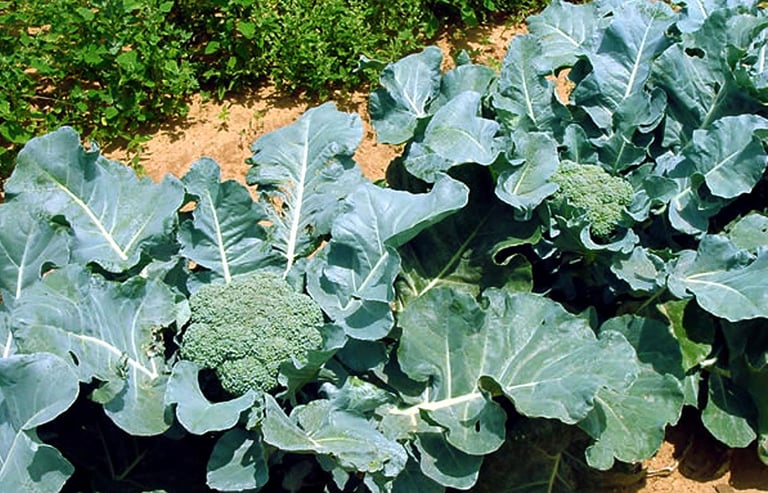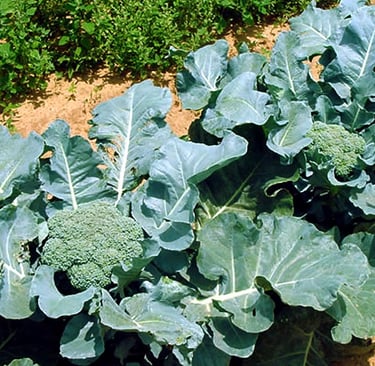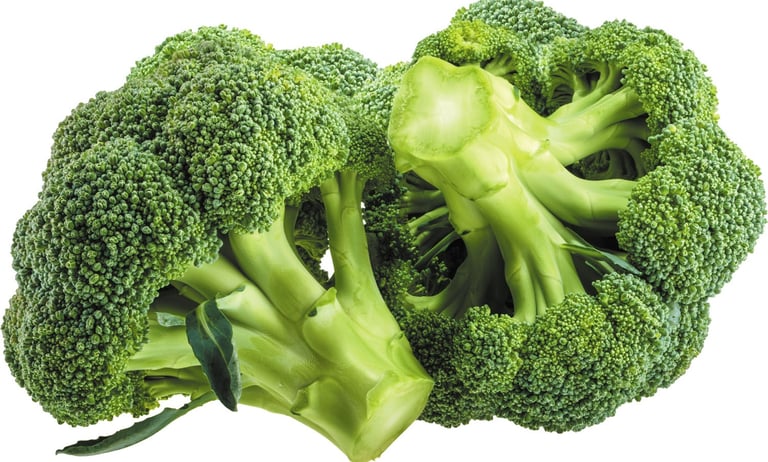
Broccoli (Brassica oleracea var. italica)
Broccoli (Brassica oleracea var. italica)
Quick Facts
• Category / Part used: Vegetable (flower buds, stems)
• Family: Brassicaceae (cruciferous family)
• Species: Brassica oleracea
• Variety: italica
• Origin: Mediterranean region (ancient Italy)
• Seasonality: Cool-season crop; peak in fall and spring
• Flavour & Texture: Mild, slightly bitter, vegetal; crisp-tender when cooked properly
• Common uses: Steamed, roasted, stir-fried, soups, salads, smoothies
Overview
Broccoli is a cruciferous vegetable prized for its dense nutrient profile and versatility. The edible parts include the flower buds (florets) and stems, both of which are rich in vitamins, minerals, fibre, and bioactive compounds such as glucosinolates.
Appearance & Identification
• Color: Deep green to bluish-green florets
• Structure: Tree-like clusters of tight flower buds on thick stems
• Selection tips: Look for firm stalks, tight florets, no yellowing or strong odor
Taste & Texture
• Taste: Mildly bitter, earthy
• Texture: Crunchy raw; tender-crisp when lightly cooked; soft if overcooked
Nutrition Snapshot
Raw broccoli – per 100 g (approximate averages):
Nutrient Amount
Calories ~34 kcal
Carbohydrates ~6.6 g
Fiber ~2.6 g
Sugars ~1.7 g
Protein ~2.8 g
Fat ~0.4 g
Vitamin C ~89 mg
Vitamin K ~102 mcg
Vitamin A (RAE) ~31 mcg
Folate ~63 mcg
Potassium ~316 mg
Calcium ~47 mg
Magnesium ~21 mg
Iron ~0.7 mg
Common serving: 1 cup chopped (91 g) ≈ 31 kcal
Evidence-informed Health Notes
• High in vitamin C: supports immune function and antioxidant defenses
• Rich in vitamin K: important for bone health and normal blood clotting
• Fiber content: supports digestion and gut health
• Glucosinolates & sulforaphane: studied for cellular protection and detoxification pathways (food-level support, not medical treatment)
Culinary Uses
• Best methods: Steaming (short), roasting, stir-frying
• Raw uses: Slaws, salads, smoothies
• Savory pairings: Garlic, lemon, olive oil, chili, soy sauce, sesame
• Tips: Light cooking preserves nutrients better than long boiling
Storage & Shelf Life
• Fresh: Refrigerate unwashed, loosely wrapped; use within 3–5 days
• Cut: Store in an airtight container; use within 2–3 days
• Cooked: Refrigerate up to 3 days
• Freezing: Blanch briefly before freezing; keeps 8–12 months
Preparation Basics
• Rinse under cold water before use
• Peel tough outer stem layer if thick
• Cut florets evenly for uniform cooking
• Avoid overcooking to preserve texture and nutrients
Recipes (ideas)
• Simple steamed broccoli with olive oil and lemon
• Roasted broccoli with garlic and chili flakes
• Broccoli soup with onion, garlic, and vegetable broth
• Stir-fry with tofu or chicken
• Broccoli salad with nuts and yogurt-based dressing
Growing Guide (if relevant)
• Sun: Full sun to partial shade
• Soil: Fertile, well-drained, slightly acidic to neutral
• Climate: Cool-season; prefers 15–20°C
• Harvest: Cut central head before flowers open; side shoots follow
Ayurveda (traditional view)
• Rasa (taste): Bitter, astringent
• Virya (energy): Cooling
• Dosha effect:
o May aggravate Vata if eaten raw or in excess
o Generally balancing for Kapha
• Best preparation: Cooked with warming spices (ginger, cumin, black pepper) and ghee to improve digestibility
Traditional Chinese Medicine (TCM) (traditional view)
• Nature: Cool
• Flavor: Bitter
• Primary action: Clears heat, supports liver function, aids digestion
• Seasonal fit: Spring
• Preparation: Light cooking recommended; combine with warming ingredients if digestion is weak
Safety & Considerations
• Thyroid conditions: Excessive raw intake may interfere with iodine metabolism; cooked broccoli is generally preferred
• Digestive sensitivity: Can cause bloating if eaten raw or in large quantities
• Blood thinners: High vitamin K content may require consistent intake levels.
.